Pooja's research is built to be used: by schools, by services in crisis, by the NHS and by policymakers. This page brings together what has come of it so far, drawn from published reports, LJMU news, partner organisations and Hopeshow panels, with the words of the people she works with. Every item links to where it comes from.
About 800Year 10 pupils taught suicide prevention lessons, by June 2025
About 100young people identified as at risk and referred for support at school
Schools
Suicide prevention in the school day
MAPSS, the Multi Modal Approach to Preventing Suicide in Schools, is led with Dr Emma Ashworth. It brings a workshop for every Year 10 pupil, a voluntary screening survey, an eight week online therapy programme and training for teachers and parents into school hours. LJMU describes the NIHR funded trial, which ran in six schools from February 2024 to January 2026, as the first of its kind for schools in England.
In June 2025 the team won the Ruth Young Award for Research Implementation and Impact at the Health Innovation North West Coast Awards, for work with more than 20 collaborators including lived experience advisors, schools and national charities.
Grassroots Suicide Prevention, which delivers the workshops, told the Manchester Hopeshow in September 2025 that they had reached approximately 1,000 pupils. At Wirral Grammar School for Boys, pupils who took part in suicide prevention training in Year 10 now help run a student led mental health team, and the school describes itself as a suicide safer school.
3,993men referred to James' Place between July 2022 and August 2024, in the latest evaluation
5 yearsof independent evaluation
Men in suicidal crisis
Evidence that a community model works
Pooja's team has evaluated James' Place since its first year. The latest evaluation analysed clinical data from the Liverpool, London and Newcastle centres. Most men who completed therapy showed statistically significant reductions in psychological distress and in feelings of entrapment, and the evaluation found benefits for families, employers and public services including the NHS. LJMU reports that the research has informed the service's plans to expand.
Earlier reports found the service was just as effective during the Covid pandemic, and that every man who took part in the before and after measures in the first year showed clinically and statistically significant positive change.
9,801people accessed The Martin Gallier Project between 2019 and 2025
Parliamentwhere the evaluation was launched, September 2025
Crisis care
A non clinical crisis service, evaluated with the NHS
The Martin Gallier Project in Birkenhead has no entry criteria, no waiting list and no barriers to access. Pooja's mixed methods evaluation drew on service data and 50 interviews with clients, carers, staff and referrers. Clients improved significantly across all recovery domains, and in a follow up sample of 112 people, 106 improved.
The report was launched in Parliament for MPs and partners. Pooja backed the service's continuation, expansion and sustained investment, as a framework other regions and the nation could adopt.
100%of children said they looked forward to attending, after eight weeks
90%+reported better confidence and wellbeing
Children bereaved by suicide
Peer support that children say changed things
Alfie's Squad supports children grieving a suicide loss, with a parallel group for their parents and carers. Its independent evaluation by LJMU, "When I came here, everything changed" (2025), was written by Pooja and colleagues. The service reports from the evaluation that all participants had made new friends within six months, and that parents and carers felt less isolated and often built lasting support networks of their own.
1 in 6women in perimenopause and menopause with suicidal thoughts that are not being identified or treated effectively
90%+fall in suicidal thoughts after hormone treatment, among women who reported them at their first appointment
957women's records analysed
Women's health
Putting menopause and suicide on the agenda
With Dr Olivia Hendriks and Dr Louise Newson, Pooja's team found that suicidal thoughts in midlife women did not reliably show up on standard depression questionnaires. The team is calling for perimenopause and menopause to be recognised as critical times in national mental health and women's health policy, with integrated clinical pathways, better training for clinicians and consistent NHS access to evidence based hormone treatment.
The findings have reached national audiences: two ITV Granada Reports investigations in September 2026, Euronews Health in March 2026, The Conversation (republished by 1News in New Zealand) and the Dr Louise Newson Podcast.
8Hopeshow panels across 7 places, each filmed and shared
19Let's Talk Hope podcast episodes, across three series
Changing the conversation
The Hopeshow and Let's Talk Hope
The national campaign to change the narrative around suicide launched in Liverpool in June 2025, with Grassroots Suicide Prevention, Ian Byrne MP and campaigner Mike Palmer taking part. Since then panels have been held from Anglesey to Glasgow, each bringing together people with lived experience, researchers, practitioners and policymakers. The second podcast series gives a voice to children and young people, and the third, released in August 2026, includes episodes on PMDD and on honour based abuse.
£533,375in funded projects led as principal investigator
Policy and influence
Evidence that reaches decision makers
According to LJMU, Pooja's evidence supports the All Party Parliamentary Groups on suicide prevention and on education, and her work with James' Place contributes to policy discussions on male suicide. She is a member of the Suicide Prevention Operational Group and the Support after Suicide Task Group in Cheshire and Merseyside, co chairs the International Association for Suicide Prevention's primary care special interest group, and founded the Suicide and Self-Harm Research Network North West.
The Women's Health Agenda, House of Commons, November 2026
“Hormonal health needs to be considered a lot sooner than it is.”Professor Pooja Saini, speaking at The PMDD Project's event
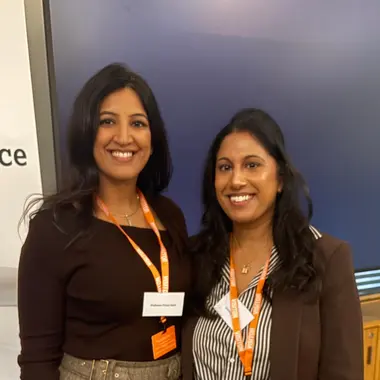
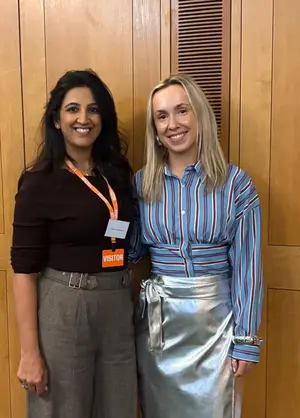
Pooja with Dr Milli Raizada, Head of Research at The PMDD ProjectPooja with Phoebe Williams, Founder and CEO of The PMDD ProjectThe Women's Health Agenda: Moving from Strategy to Action
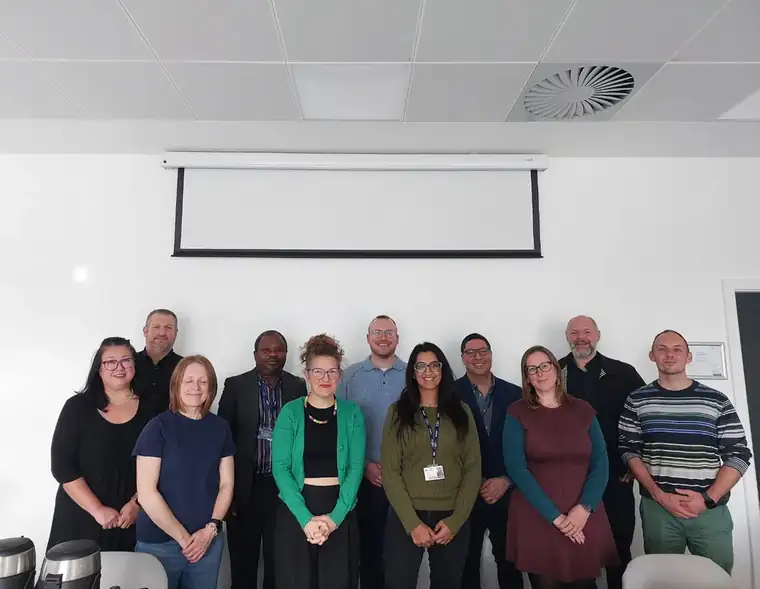
Colleagues at the launch of the Impact Champions Network, Liverpool John Moores University, October 2026.
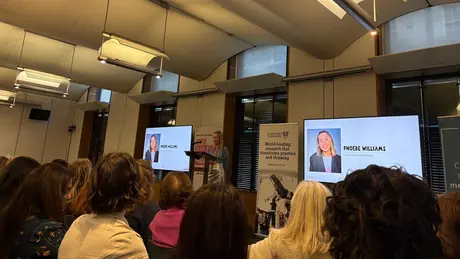
The Women's Health Agenda: Moving from Strategy to ActionThe PMDD Project, House of Commons, November 2026. Pooja's key messages: we need guidance for PMDD, services should be implemented now using the evidence that already exists, and suicide prevention must be central to women's hormone health across the life course.
Impact Champion, Liverpool John Moores UniversityOne of the first colleagues named to the Impact Champions Network, launched October 2026 to strengthen research impact culture across the university
Chair of Hopeshow panels at conferences and universitiesGlasgow, alongside Professor Rory O'Connor, President of the International Academy for Suicide Research. The Suicide Bereavement UK conference, Manchester, September 2025. University of Birmingham, October 2025.
AppointmentsHonorary Suicide Prevention Research Lead, Mersey Care NHS Foundation Trust. Suicide prevention research lead, M-RIC. Co chair, IASP Suicide Prevention in Primary Care Special Interest Group.
In their words
Partners, schools and panellists, speaking at Hopeshow panels and in published statements. Quoted with their agreement.
“The reason we got involved is because we love Pooja and we love everything she's doing.”
Deryn BasnettChief Operating Officer, The Martin Gallier ProjectHopeshow, Liverpool, June 2025
“My hope is that this report not only evidences our impact but also serves as a blueprint for what suicide prevention can, and should, look like across the country.”
Jessica Gallier-BoothFounder and CEO, The Martin Gallier ProjectOn the evaluation report, LJMU news, September 2025
“The impact reporting that Pooja and her team are doing at John Moores University is absolutely brilliant, because it's measuring the numbers of people that you're working with, but also the real life impact of that.”
Angela SamataPresenter of the BBC One documentary Life After SuicideHopeshow, Manchester, September 2025
“We've had incredible feedback from the teachers, who feel really equipped, and from the students, who said the conversations allowed them to have the space to talk and open up.”
Rachael SwannChief Executive, Grassroots Suicide PreventionHopeshow, Liverpool, June 2025
“The workshops have been delivered as part of the academic research to approximately 1,000 pupils so far.”
Joanna JohnsonSenior Trainer and Partnerships Manager, Grassroots Suicide PreventionHopeshow, Manchester, September 2025
“Pooja is amazing at embracing new ideas, and we've got some really incredible results coming out.”
Dr Louise NewsonPhysician and hormone specialist, Newson HealthHopeshow, Liverpool, June 2025
“It made us a suicide safer school, and I think we were the first one to do it.”
Adrienne SmithLearning mentor, Wirral Grammar School for BoysHopeshow in schools, Wirral
“The most important thing from this is that we have young people who know it's okay to ask for help, and it's okay, they're never going to be alone.”
Adam WalkerHead of Student Services, Wirral Grammar School for BoysHopeshow in schools, Wirral
“It's just a case of get started and get people talking about the things that they wouldn't be otherwise.”
Senior prefectStudent, Wirral Grammar School for BoysHopeshow in schools, Wirral
Figures are given as reported by each linked source and were checked in October 2026. Quotes are taken from Hopeshow panel recordings and published statements.